Ghosts
Showing posts with label Ghosts. Show all posts
06 July 2026

Review: Atlas of Paranormal Places by Evelyn Hollow

Atlas of Paranormal Places - A Journey to the World's Most Supernatural Places by Evelyn Hollow book cover

Atlas of Paranormal Places - A Journey to the World's Most Supernatural Places by Evelyn Hollow is broken down into the following chapters: Haunted Places, Witchcraft, Sacred Sites, Myths & Legends, Strange Nature, and finally Cryptids & Creatures.

There's only one place listed for Australia, and I thought it would be the Devil's Pool, Babinda Boulders in Queensland but it's not. I'd never heard of Wycliffe Well in the Northern Territory but it's included in this atlas for its connection to UFO sightings, spies and ancient spiritual worship.

The atlas includes several locations familiar to this reader like the Catacombs in Paris, the Winchester Mystery House in California USA, Pendle Hill in Lancashire England, the Hanging Coffins of Sagada in the Philippines, Aokigahara Forest in Japan and the Door to Hell in Turkmenistan.

It was also nice to see the inclusion of Scotland's Bannockburn House in this collection as it was featured in the filming of the fantastic Outlander series.

However my favourite discovery of the book was that of Burg Eltz in Germany. Describing this twelfth century medieval German castle as a fairytale castle is an understatement. The home of the Eltz family for more than 800 years, it contains the ghost of a young woman who defended her home from an unwanted suitor and paid for her bravery with her life. Burg Eltz is one of the most wondrous castles I've ever seen and the photos on their website showcases the stunning grandeur of its architecture.

True to its name, the Atlas of Paranormal Places includes a world map at at the beginning of the book with each of the locations marked. Then each separate entry features a map page indicating the specific location of the place being described. My hardback edition borrowed from the library contained suitably themed end papers although I wish there were more photos included.

The Atlas of Paranormal Places - A Journey to the World's Most Supernatural Places by Evelyn Hollow enables the inquisitive reader to journey to paranormal places and explore geographic curiosities around the world, all from the safety of home.

And if you like the sound of this, you might also enjoy reading the Atlas of Improbable Places - A Journey to the World's Most Unusual Corners by Travis Elborough.

My Rating:

Carpe Librum!

31 December 2025

Review: Best Australian Ghost Stories by Graham Seal

Best Australian Ghost Stories by Graham Seal book cover

* Copy courtesy of Allen & Unwin *


As I understand it, to have a yarn in Australia is to have a conversation or a chat, to tell a yarn is to tell a story and to spin a yarn is to tell a tall tale or something that is unlikely to be true. In Best Australian Ghost Stories - Spine-chilling Tales of Hauntings, Apparitions and the Unexplained, Graham Seal continually refers to the accounts he's presenting as yarns, stories and hoaxes and in doing so diminishes the value of the stories and the likelihood of them being true and honest accounts in the view of the author.

Graham Seal is a prolific author of 14 books (including: Great Australian Places, Great Australian Mysteries, Australia's Funniest Yarns, Great Bush Stories, Great Convict Stories) and it seems to me this collection of ghost stories were likely unearthed during the comprehensive research undertaken for his other works and brought together here, despite the author not seeming to believe in ghosts.

In the Introduction, Graham Seal makes it pretty clear that he's a sceptic and doesn't believe in many of the hauntings and unexplained events he's about to inform the reader about:
"Outside works of fiction, Australian hauntings, vanishings and unexplained events happen - if they did - in a landscape marked by its rivers, waterholes and surrounding seas, its islands and its abandoned places." Page xvi
Broken down into unique categories - Bush Haunts, House Ghosts, Unsettling Places, Ghost Roads and more - there were often too many stories presented in quick succession; this pub has a ghost in it, this inn has a woman in white. The sheer number of cases cited along with the scant information available about each of them made it difficult to be spooked or reach the spine-chilling reading experience hinted at on the cover.

And then there were bizarre moments like this one. When discussing the plan by scientists to resurrect the Tasmanian Tiger using DNA technology, the author wonders how long it'll be before the same technology is applied to dead humans. Ummmm what? Humans aren't extinct so clearly he missed the point altogether. Either that, or this was an attempt at humour that sailed right over my head.

I was pleased to see the case of Minnie Brown and the unexplained poltergeist activity that took place in 1921 taken seriously but then disappointed the very next chapter when the author describes the events in a remote town in the Northern Territory in 1998 as Humpty Doo high jinks as he wonders whether it was all a hoax.

The author frequently uses negative language like shades and ghouls and phrases such as supernatural spice throughout the book which begins to build a mocking and condescending tone. The reader who picks up a book about ghost stories is more likely to have an open mind or a firm belief in the unexplained so the failure of the author to take the topic seriously struck a sour note.

I also found myself wondering why Seal chose to include stories where the ghostly activity was proven to be caused by hardcore hoaxers or prankers. What value do stories like these add to a book entitled Best Australian Ghost Stories? I didn't choose to read a book about Best Australian Hoaxes and in my opinion these accounts detracted from the theme and had no place being included.

Why the mocking tone? In the Ghost Roads chapter I could almost hear him rolling his eyes:
"While these events are disturbing enough, drivers also report their headlights illuminating ghostly figures along the road and - always dependable - the Yowie has been seen." Page 194
Ironically, this same chapter also contained one of the best stories which was entitled The Ghost of the Old Bridge and took place in Western Australia in the 1870s. What made it the most enjoyable of the collection was the long and detailed first person account from settler Thomas Scott included in the book. For the first time this allowed the reader to stick with one account and travel back 150 years to hear directly from a witness relaying a sighting seen by at least five others.

Several first hand accounts from direct sources were included and if more of these had been incorporated in favour of the hoax narrative, this book would have been a terrific read.

As it is, when I think of this book in the future, I think I'll remember it for the inspired inclusion of the poem 'The Ghost at the Second Bridge' by Henry Lawson. It's been a long time since I've read any Henry Lawson and reading the story of two men encountering the Black Lady in the middle of the night was immensely enjoyable.

As the End Notes attest, it's evident that a tonne of research has gone into the writing of this book, and that's to be acknowledged and admired. In addition, I was pleased to see Australian Ghost Stories by James Phelps mentioned in the author's Afterword as I read and enjoyed this last year.

Readers wanting to know if their local legend is included are likely to find it briefly mentioned in Best Australian Ghost Stories by Graham Seal, but if you're looking for a serious, deep and penetrating look into hauntings and apparitions in Australia that'll make the hairs on your arms stand on end, this isn't it.

My Rating:


09 June 2025

Review: The Mad Women's Ball by Victoria Mas

The Mad Women's Ball by Victoria Mas book cover

The Mad Women's Ball by Victoria Mas is set in 1885 at the Salpêtrière Asylum in Paris. At the time, women who were homeless, practising prostitution or suffering from a mental illness or neurological disorder found themselves committed to the asylum. A woman who publicly criticised her husband's infidelity could be locked away. If a woman didn't want to marry and was discovered to prefer same sex relationships, she was locked up. A middle aged woman flaunting herself on the arm of a much younger man could be incarcerated for debauchery, while today we'd call her a cougar.

According to the author, women of loose virtue, the dotards and the violent, the hysterics and the simpletons, the fantasists and the fabulists were all admitted. Basically, the Salpêtrière took in women Paris didn't know how to deal with.

A diagnosis of hysteria was easily made and I knew I'd find it frustrating at just how easy it was to pack a woman off to an insane asylum in this period of history.
"The Salpêtrière is a dumping ground for women who disturb the peace. An asylum for those whose sensitivities do not tally with what is expected of them. A prison for women guilty of possessing an opinion." Page 27
Primarily a dual narrative, Geneviève is the Matron of the Asylum and a stern mother figure to the nurses. Eugénie is from a well to-do family and finds herself sent to the Salpêtrière Asylum after confiding in her grandmother that she can see ghosts. Geneviève has devoted her life to the Asylum looking after the inmates, but things begin to change for her when Eugénie arrives.

Inspired by history and including the work of Jean-Martin Charcot - renowned for founding modern neurology as we know it - the title was drawn from the fact that a ball was held at the Salpêtrière Asylum every year. Patients were dressed in elaborate gowns and members of high society attended the ball to observe the madwomen from a safe distance and watch them dance. In the novel, the majority of patients look forward to the ball and the opportunity to dress up, be seen by the public and maybe meet a man while the spectacle and behaviour of Paris' elite left a lot to be desired.

A relatively short novel with a satisfying conclusion, I was hoping for a greater focus on Eugénie's ability and would happily follow her into a second novel to see what becomes of her.

Published in 2019 and translated from French, The Mad Women's Ball by Victoria Mas is about agency and the suppression of female autonomy in 19th century France and in 2021 it was also made into a movie in France.

My Rating:


14 October 2024

Review: Australian Ghost Stories by James Phelps

Australian Ghost Stories - Shocking True Crime Stories of the Haunted, The Supernatural and Paranormal Happenings by James Phelps book cover

* Copy courtesy of Harper Collins *


Australian Ghost Stories - Shocking True Crime Stories of the Haunted, The Supernatural and Paranormal Happenings by James Phelps was an engaging piece of investigative journalism and a riveting read.

Promises to include accounts from a rugby league legend, Bathurst winner and an Aussie rock icon were delivered, although my favourite accounts came from regular members of the public. I was hoping to read about the house in Humpty Doo, but given the author's efforts to bring previously unknown cases to light and shy away from the already heavily publicised ones, I understand why Humpty Doo wasn't included.

In addition to several family homes on regular suburban streets, the author included the Aradale Lunatic Asylum in Ararat, Victoria, and the Hydro Majestic in the Blue Mountains, NSW. This was the first time I'd ever heard mention of the Hydro Majestic - the hydropathic sanatorium turned hotel retreat for the rich - but then it cropped up in the very next book I read, Everyone This Christmas Has a Secret by Benjamin Stevenson. I love bookish coincidences like this and I'd love to stay there one day.

Not surprisingly, the author drew from his extensive knowledge of Australian prisons and jails, having researched and written several books about them, two of which I've read: Australia's Most Murderous Prison - Behind the Walls of Goulburn Jail and Green Is The New Black - Inside Australia's Hardest Women's Jails. St Saviour's Cemetery is the oldest of Goulburn's forty graveyards and the accounts from hardened prison officers working at Goulburn jail were super creepy.

The colour photographs were a great inclusion and not all accounts were specifically linked to a true crime; in many cases there was no known reason for the haunting. In presenting his research gathered from interviewing more than a hundred people, James Phelps isn't afraid to break the fourth wall and the narrative often jumped around in time and location.
"(Even authors are allowed to do supernatural things while writing a book about the supernatural). And to confuse things even more, we are going to hit fast forward instead of rewind." Page 136
I wondered why this seemingly erratic writing style was necessary and I can only imagine it was to keep the reader engaged but a lesser committed reader may find it too distracting. Not me though, I was here for ALL of the stories, no matter their method of delivery or how much I longed for a fixed structure.

Enjoying an interview with James Phelps about Australian Ghost Stories on GoodReading recently, I was surprised to read that the author doesn't believe in the supernatural. If Phelps was a sceptic looking for answers, surely he found them after traversing the country recording first hand accounts with people from all walks of life with nothing to gain by sharing their accounts for this book. There are just too many unexplained experiences.

Australian Ghost Stories by James Phelps made the hairs on my arms stand up, but if you're a sceptic, I'm not convinced this will make you a believer; but what could? Perhaps a visit to St Saviour's Cemetery would be a good place to start... or if that sounds too confronting, you could always read a FREE sample of the book... with the light on of course!

My Rating:


07 May 2024

Review: The Warm Hands of Ghosts by Katherine Arden

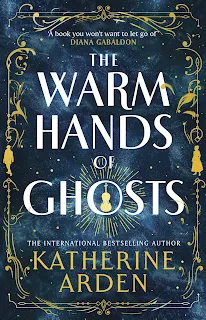
The Warm Hands of Ghosts by Katherine Arden book cover

* Copy courtesy of Penguin Random House *

Intro

You're not seeing things, what follows is a review of an historical fiction novel set during WWI. I know I've said here on Carpe Librum that I'm - mostly - on a break from WWI and WWII historical fiction, however such is the power of Katherine Arden that I made an exception.

Last year I reviewed The Bear and the Nightingale by Katherine Arden and fell in love with the writing style of this YA urban fantasy / historical fiction series. The Bear and the Nightingale earned a glowing 5 star review and I'm still looking forward to reading the next book in the Winternight trilogy The Girl In The Tower. Therefore I was surprised to see the author pop up in a publisher's catalogue with an adult title The Warm Hands of Ghosts. Seeing it was an historical fiction novel set in WWI, I was keen to see how - or if - the author would bring her love of Russian myths and legends and sense of 'other' to a bloody war and now I have my answer.

Review

I shared this back story because I didn't know what to expect - other than great writing - reading The Warm Hands of Ghosts by Katherine Arden. It's quite possible that if I'd known just how dark the book was going to be, I might not have requested it for review. Having said that, going in blind was the best approach for me and I'm glad I read it.

Laura Iven is a Canadian nurse providing medical care to the soldiers on the Western Front during WWI when she is injured during the bombing of a hospital, discharged and sent back home to Halifax in Canada to recover.

The snappy writing and depth of character was immediately present in the author's writing. Here's one of my favourite observations by Laura:
"Laura tried not to look cynical. Pim appeared simultaneously flattered, delighted to make his acquaintance, and innocently unavailable. She'd probably practiced that expression in a mirror." Page 91
Laura's brother Wilfred (Freddie) is a soldier serving in Belgium and after receiving contradictory news and fearing he might be missing, she risks another deployment and travels back to Belgium in search of him. Volunteering at a private hospital in Flanders, Laura and her colleagues struggle to stay on their feet working for days without rest in the gruelling conditions. Laura speaks to the men as she tends to their wounds and starts to hear strange stories about the Fiddler.

The novel is set in alternate chapters with Laura in present day January 1918 and Freddie's point of view from several months earlier enabling the reader to discover what happens to him. Incorporating elements of the Halifax Harbour explosion from history was a refreshing angle I hadn't come across in WWI literature and it was interesting to learn more about this disaster from the character's perspective.

Laura's brother was named Wilfred in the novel and every time I saw his name on the page I reacted with 'oh, I thought that was going to read Wilfred Owen.' I studied the works of WWI poets Wilfred Owen, Siegfried Sassoon and Robert Graves in a War Literature course at University so I felt rewarded when I noted the following in the Afterword:
"Her brother's name, Wilfred, is a hat-tip both to Ivanhoe and to Wilfred Owen, whose poem "Strange Meeting" was the starting point for Freddie's story." Afterword, Page 378
What a terrific tribute to the poet and for those interested, you can read Wilfred's short poem Strange Meeting in full on the Poetry Foundation website.

The Warm Hands of Ghosts by Katherine Arden is difficult to read at times. It's brutal and graphic yet also tender and achingly beautiful while accurately conveying the destruction and hopelessness of war without flinching away from the horror. Reading this in the lead up to ANZAC Day enhanced my sense of gravitas while reading but the kiss at the end was one step too far for me.

Highly recommended for experienced readers of WWI historical fiction with a strong stomach looking for a new story that stands apart from the rest. Not sure? Read a free EXTRACT.

My Rating:


19 January 2024

Review: The Strangers on Montagu Street (Tradd Street #3) by Karen White

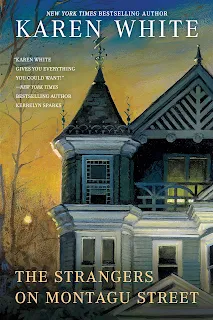
The Strangers on Montagu Street (Tradd Street #3) by Karen White book cover

From one book with a creepy house at sunset on the cover to another, and this is my third visit to the Tradd Street series written by Karen White. Beginning with The House on Tradd Street (#1) and continuing with The Girl on Legare Street (#2), The Strangers on Montagu Street (#3) picks up with the same set of characters and moves us along with their lives and complex relationships.

Melanie Trenholm is a successful realtor in Charleston, South Carolina and continues to work on restoring her historic home. Love interest Jack is still on the scene but he's shocked early on to discover he has a daughter he didn't know about. Oh, and Melanie is also psychic but she keeps it on the down low.

Not sure why it is that I enjoy this series so much, is it the frequent mention of architecture, restoration and antiques? Melanie's ability to see/sense ghosts or the tension brewing between Melanie and Jack? I don't usually enjoy the romance elements of a plot but here it works. The Southern location and sultry heat along with unearthing family secrets containing betrayal and loss kept the pages turning with enthusiasm. And there's even a haunted dollhouse, need I say more?

With so much time elapsing since reading the first two books in 2011 and 2015 respectively and with the third in 2024, I'm surprised I was able to immediately dive straight back into the series with such ease and relish. It shouldn't have come as a surprise that while I was off reading other things, the author continued on with the series, ultimately choosing to end it with book #7 in 2021.

It's rare for me to be able to read a series right through to its conclusion - either losing interest, prioritising elsewhere or abandoning the task due to diminishing reading returns - but I'm excited to give it a try this time, and now have the following books to look forward to.

The remaining books in the series are:
  • Return to Tradd Street (#4)
  • The Guests on South Battery (#5)
  • The Christmas Spirits on Tradd Street (#6)
  • The Attic on Queen Street (#7)
Any prediction as to when I'll finish reading the series? 😆

My Rating:


19 October 2023

Blog Tour and Giveaway for Bone Rites by Natalie Bayley

* Copy courtesy of the author *

Carpe Librum Giveaway image for Bone Rites by Natalie Bayley

Intro

Natalie Bayley is a talented UK born Australian author residing in Sydney and it's a pleasure to be part of the digital blog tour celebrating the release of Bone Rites.

To celebrate the book launch, I'm hosting a giveaway and will be sharing a guest post from the author later this month entitled A Wander through the Weird & Wonderful World of the Edwardians.

In the meantime, it's giveaway time!! For your chance to win a signed copy of Bone Rites, winner of the The Virginia Prize for Fiction, enter below.

Blurb

"I collected the first bone when I was twelve. This fact was not mentioned in court... Such a tiny little bone, more like a tooth. I only kept it to keep him safe."
Holloway prison, 1925. Dr Kathryn Darkling, branded The Westminster Vampire by the press, has two weeks until she is hanged for a series of brutal murders. Facing death, she knows that time is running out to complete her mission. Will she find a way to escape her fate?

Will she be able to perform the special bone rites that will save her brother?

Bone Rites is a dark, literary tale of love, loss and one woman's obsessive fight for justice and redemption within a ruthless world.

Review

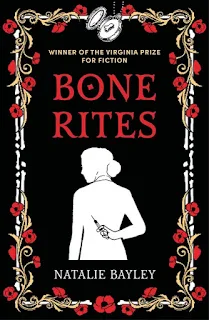
Bone Rites is a dark historical fiction novel set in the Edwardian period, in London. Dr Kathryn Darkling's story alternates between her Holloway Prison jail cell in 1925, and the events that led her there, beginning in 1905 with an irreversible injury suffered by her brother.
Bone Rites by Natalie Bayley book cover

Kathryn is an easy character to warm to and the familial love she has for her younger brother powers the entire book. Pursuing an early interest in medicine, Kathryn struggles to succeed in a male dominated environment and takes measures to address them that had me clapping and cringing.

As Kathryn began to cross the lines of morality in the pursuit of her life's work, her sanity starts to shift and slide with the introduction of a supernatural influence after her service as a doctor in the war.

The research behind Bone Rites was seamlessly incorporated and the writing was polished, giving me great reading moments like this one: 
"My hand connects with her face with such force the resultant crack silences the room." Page 223
At the time of reading, I could almost hear the reverberations of that crack and flinched from the impact of 'that' slap. The narrative is convincingly gothic and dark and will appeal to readers of Stacey Halls, Jess Kidd and Laura Purcell; in particular The Corset by Laura Purcell.

Bone Rites by Natalie Bayley is about female agency, sibling love, forbidden love, the ravages of grief, the horrors of war, justice, redemption and ultimately hope. Enter below for your chance to win a signed copy!

My Rating:

Giveaway

This giveaway has now closed.


30 November 2022

Review: The Winter People by Jennifer McMahon

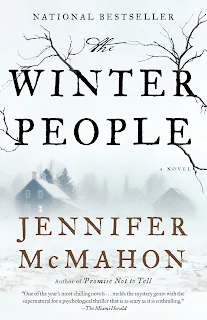
The Winter People by Jennifer McMahon book cover

Published in 2014, The Winter People by Jennifer McMahon has been on my virtual 'maybe' list for several years; okay I'll admit it, 8 years. During this time, the author has published several new novels the blurbs of which have also piqued my interest; I'm looking at you The Drowning Kind and more recently The Children on the Hill. I'm the kind of reader who sometimes prefers to try an older title before deciding if an author is worth continuing on with, so thanks to my library for making that possible.

The Winter People is a paranormal mystery set in West Hall, Vermont, replete with strange disappearances, ghost sitings, myths and legends surrounding a circle of stones called the Devil's Hand and a ring made of bone.
"They think that there's something out there, in the woods at the edge of town, something evil, something that can't be explained. There have been a lot of stories over the years, folks who've gone missing, people who say they see strange lights or hear crying sounds, tales of a pale figure roaming the woods. When I was a boy, I thought I saw something myself one time: a face peering out at me from a crack between the rocks. But I moved closer and it was gone." He made his eyes dramatically wide and gave a little chuckle. "Have I scared you yet?" Page 132
The story alternates between time periods - 1908 and the present day - and different character perspectives (Ruthie, Katherine, Martin) and also includes diary entries from The Secret Diary of Sara Harrison Shea that add to the layers of suspense. Eventually the author skilfully brings all of the stories together and in doing so, solves the mystery.

The clever plotting reminded me of the likes of Ruth Ware or Laura Purcell, although I already read quite a few accomplished authors in this particular niche.

The Winter People has been classified by many readers as horror, however I found it only mildly creepy, if that. I believe it belongs more fittingly in the category of YA historical fiction and domestic noir with a touch of the paranormal and supernatural and it was a good choice for the October / Halloween reading schedule.

The Drowning Kind was published in 2021, so based on previous trends, I'll probably get to it in 2029! Have you read any books by this prolific author?

My Rating:


09 September 2022

Review: The Twisted Tree by Rachel Burge

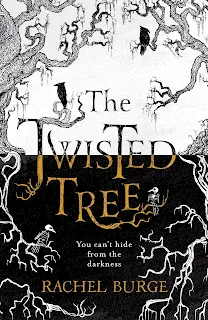
The Twisted Tree by Rachel Burge book cover

Reading the blurb for The Twisted Tree by Rachel Burge and finding out the main character Martha can tell things about a person just by touching their clothes, I was immediately sold. 

Discovering this is a young adult debut and part ghost story set in Norway based on ancient Norse mythology was a bonus.

Regular Carpe Librum followers will no doubt have noticed that I don't read much YA at all, but The Twisted Tree reminded me that I still enjoy the odd title every now and again.

Martha is partially blinded in an accident and has run away from home. She travels to Norway seeking answers from her grandmother, desperately hoping she can explain her strange ability to discern memories and emotions just from touching a person's clothes.
"Mum had bought the blouse a few days ago, and it was the first time I'd touched silk. I know from going through her wardrobe that different types of fabric reveal their secrets differently - cashmere holds a person's emotions and makes you feel them like your own; cotton shows images and facts without feeling - but silk is like nothing else. It speaks of deceit." Page 19
Complete with a creepy gothic cover design and easy to read YA thriller building from the opening pages, The Twisted Tree by Rachel Burge was a pleasure to read.

Martha is struggling to come to terms with her changed appearance since the incident that left her blind in one eye, and there is a subtle budding hint of romance that takes place during all of the spooky thrilling action.

The Twisted Tree is the first in a series to feature Martha, and the next one is called The Crooked Mask and was published in 2020. The Crooked Mask continues the story of the two main characters, but I think I'm happy to leave them here, fully satisfied that I finally read this book, after adding it my list back in November 2018.

The Twisted Tree by Rachel Burge is a great choice for October reading, providing some scary and spooktacular moments and a super creepy tree.

My Rating: